
Detailed Overview of the Basic Properties of Construction-Grade HPMC (Hydroxypropyl Methylcellulose)
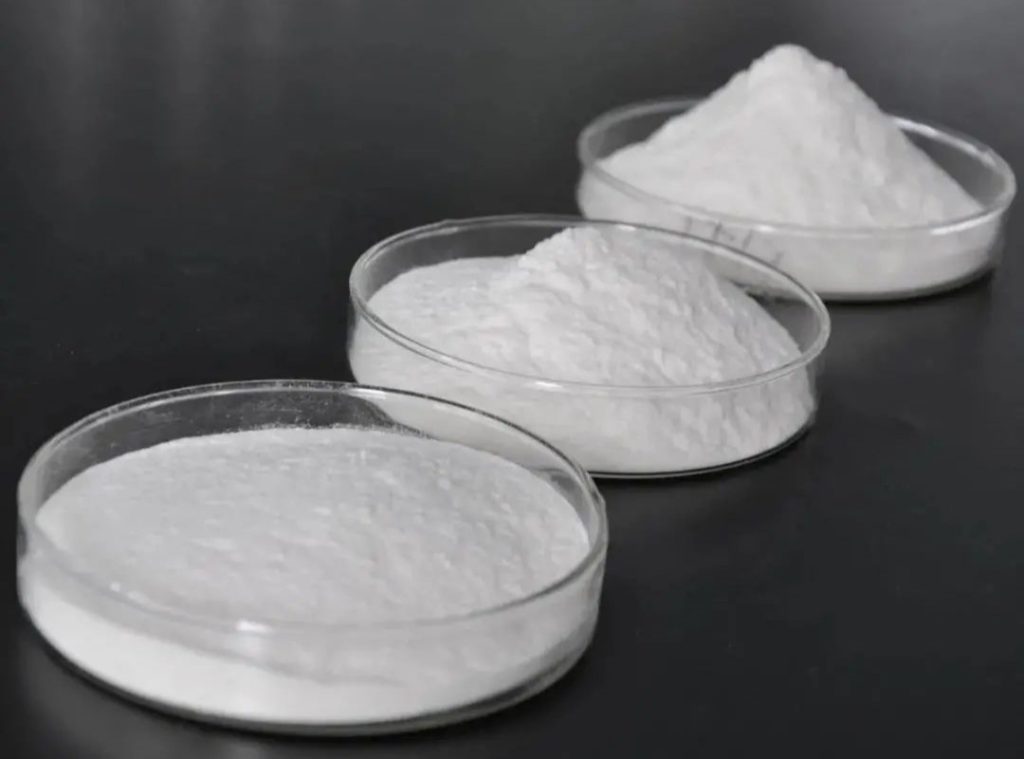
HPMC (Hydroxypropyl Methylcellulose) is a non-ionic cellulose ether derived from natural cotton pulp or wood pulp cellulose through chemical etherification. Appearing as a fine white or off-white powder, it is the most widely used core additive in dry-mix mortar systems. While it does not contribute directly to the mortar’s cured strength, it modifies the system’s state through physical action; its fundamental properties directly determine the construction performance and final quality of dry-mix building materials.
1. Dissolution Properties
HPMC disperses and dissolves in cold water; upon contact, the particles swell and gradually form a uniform, viscous colloidal solution. In hot water, it undergoes thermal gelation—precipitating as a gel once the gelation temperature is reached—and re-dissolves as the temperature drops.
This characteristic is a critical indicator for HPMC, with the gelation temperature primarily determined by the ratio of methoxy and hydroxypropyl substituent groups. The gelation temperature for construction-grade HPMC typically ranges from 60°C to 75°C. In high-temperature summer construction environments, products with lower gelation temperatures suffer a significant loss in water retention, making the mortar prone to rapid water loss and pulverization; therefore, grades with higher gelation temperatures should be selected for high-temperature conditions.
Practical Note: In its dry powder form, HPMC must be thoroughly pre-mixed with other dry ingredients—such as cement and sand—before water is added. It should not be added directly to water, as this causes it to clump and form lumps that are difficult to dissolve.
2. Viscosity Properties
The industry-standard testing method measures viscosity in a 2% aqueous solution at 20°C (unit: mPa·s); commonly used construction grades range from 400 to 200,000 mPa·s.
Viscosity indicates the thickness or consistency of the colloid: high-viscosity grades offer superior water retention and sag resistance, making them ideal for applications like putty and thermal insulation/crack-resistant mortars; low-viscosity grades offer good fluidity, making them suitable for products requiring high flowability, such as self-leveling compounds.
Viscosity is not a direct measure of product quality—higher viscosity does not equate to better quality; rather, the appropriate viscosity grade must be matched to the specific mortar formulation. Even among HPMC products with the same viscosity, water retention performance can vary; the water retention rate is a critical evaluation metric independent of viscosity.
3. Water Retention Performance
Water retention is the most fundamental property of construction-grade HPMC. The hydroxyl groups and ether bonds on the HPMC molecular chain bind with water molecules, locking free water within the mortar system; this reduces evaporation and prevents porous wall substrates from rapidly absorbing moisture from the mortar.
Adequate water retention ensures sufficient time for cement and gypsum to complete hydration reactions, thereby avoiding issues caused by rapid water loss—such as dusting, powdering, hollow areas (delamination), poor bonding, and early-stage cracking. High-quality construction-grade HPMC can enable mortar to achieve a water retention rate of over 90%. Higher ambient temperatures and higher substrate water absorption rates demand superior water retention performance from the HPMC.
4. Thickening and Sag Resistance
Upon dissolution, HPMC forms a polymer network colloid that increases the overall viscosity of the mortar. During vertical wall application, this prevents plastering mortar and tile adhesives from slumping or sagging, effectively inhibits tile slippage, and allows for thick-layer application.
Starch ethers are frequently used in combination with HPMC; their synergistic effect further enhances slip resistance.
5. pH Adaptability and Chemical Compatibility
As a non-ionic ether, HPMC remains stable within a pH range of 3 to 11, making it perfectly suited for the highly alkaline environment of cement and for gypsum-based systems.
It is highly compatible with the vast majority of additives used in the mortar industry—such as redispersible polymer powders, starch ethers, retarders, water reducers, and defoamers—without easily losing effectiveness due to chemical reactions. Lower ash content and fewer impurities in the product minimize any negative impact on the mortar’s long-term strength.
6. Construction Workability (Lubricity and Open Time)
The colloid formed upon dissolution creates a lubricating film on the surface of sand and aggregate particles, reducing inter-particle friction. This makes troweling and plastering operations smoother and reduces the tendency of the material to stick to the tool. It also extends the mortar’s open time, providing workers with a sufficient window for leveling, tile adjustment, and finishing, thereby increasing the margin for error during on-site construction. HPMC has a mild air-entraining effect, generating fine, closed-cell bubbles that improve mortar plasticity; however, the air content must not be excessive, as too many bubbles will reduce the mortar’s compressive strength.
7. Storage Stability
The product is a dry powder with high hygroscopicity and must be stored in a cool, dry environment. Significant moisture absorption impairs dispersion and dissolution properties, affecting on-site performance; the shelf life under standard sealed conditions is typically 24 months.
Performance-Related Usage Notes
The typical dosage of HPMC ranges from only 0.02% to 0.5%; a higher dosage does not necessarily yield better results. Excessive addition can retard the setting of the mortar, slowing the hardening process and reducing both compressive and flexural strength.
Ambient temperature and the water absorption characteristics of the substrate influence HPMC’s actual performance; actual formulations require fine-tuning through testing based on specific on-site conditions.
HPMC serves solely as a functional additive and cannot replace cement, gypsum, or other cementing materials.